GANDALF: "We must go through the mountains"
GIMLI: "Oh hell yeah!"
SAM (tiny, Cogsworth-like): "Oh hell nope!"
GANDALF: "It's fine, it's fine"
ARAGORN: "Be careful, Gandalf, it seems sketchy, but we're trusting you"
GANDALF: "Yeah I know, but it's fine, it'll be fine"
SAM: "Oh awesome... wolves"
*clang, clang, shing, shing, fight, fight*
*arrives at the Door of Moria*
SAM: We're never going to get through and we're going to starve here"
GIMLI: "Oh stop it, Gandalf is the wisest wizard I know!"
GANDALF: discreetly to Gimli "Is now a bad time to mention that I can't figure out the password"
GIMLI: "You can do it"
FOUR HOURS LATER
GANDALF: "GOT IT! Yeah the password was super easy"
SAM: "Well it took you long enough!!!!'
Showing posts with label team air. Show all posts
Showing posts with label team air. Show all posts
Monday, November 25, 2019

Wednesday, November 20, 2019
All that was Prologue is now Past
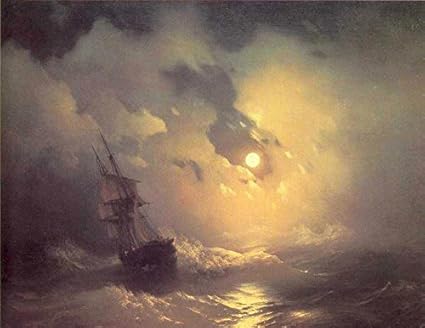
Like a dream, the sea
roils and twists into whirlwinds
that clash against sky.
Helpless figures drown
and gasp, sodden from vengeance's
sour coil. Ships crumble
and tremble; death's shroud
slices through blood; slaves ponder
the wonder chainless
limbs would promise. He,
Prospero, master of the
isle, stares forlorn
at his construction.
The end is forecast, a dance-
dalliance of love
applauded, arranged
by design. The fools of drink
and scheming plots meet
feasts and familiar
faces. Magic's slithery
touch pervades the bright-
dark journey of man's
lost and regained valor. Sleep
is found, kept close, and
cradled - conjures fan-
tastical visions of storms
untempered and stern -
of books shimmering
with a desire to know the
unknowable earth.
Man makes false monsters.
Brother moves against brother,
lovers find love, and
the ache of broken
hearts are mended, made true, soft,
free; and like a dream
the peril has passed by -
nefarious pages packed
away; trickery
grows heavy with peace.
The wind tucks itself into
nooks and crannies, still
and satisfied, in
tree shades. The spirits' bodies
contort into wings
when Ariel's acts
of fancy are retired.
Kings, princes, dukes, slaves
are joined in shared awe
of a victory won-made-
held by a man whose
magic shapes them all.
An unseen crowd crows its glee,
and all fades - complete.
roils and twists into whirlwinds
that clash against sky.
Helpless figures drown
and gasp, sodden from vengeance's
sour coil. Ships crumble
and tremble; death's shroud
slices through blood; slaves ponder
the wonder chainless
limbs would promise. He,
Prospero, master of the
isle, stares forlorn
at his construction.
The end is forecast, a dance-
dalliance of love
applauded, arranged
by design. The fools of drink
and scheming plots meet
feasts and familiar
faces. Magic's slithery
touch pervades the bright-
dark journey of man's
lost and regained valor. Sleep
is found, kept close, and
cradled - conjures fan-
tastical visions of storms
untempered and stern -
of books shimmering
with a desire to know the
unknowable earth.
Man makes false monsters.
Brother moves against brother,
lovers find love, and
the ache of broken
hearts are mended, made true, soft,
free; and like a dream
the peril has passed by -
nefarious pages packed
away; trickery
grows heavy with peace.
The wind tucks itself into
nooks and crannies, still
and satisfied, in
tree shades. The spirits' bodies
contort into wings
when Ariel's acts
of fancy are retired.
Kings, princes, dukes, slaves
are joined in shared awe
of a victory won-made-
held by a man whose
magic shapes them all.
An unseen crowd crows its glee,
and all fades - complete.
 |
| https://images-na.ssl-images-amazon.com/images/I/519lX7NiaVL._SX425_.jpg |
Monday, November 18, 2019
Keepeth My Daughter a PURE Virgin OR ELSE Fer-boy
Okay this is how this whole discussion of marriage in Act IV would have happened in modern times:
PROSPERO: So my daughter? Yeah, she's a virgin--mainly because we've been stuck on this island since she was 3-years-old. But also, I'm really controlling and focused on the idea of keeping her "pure" or whatever that means, so can you like...just not hook up? Until you're married? You know like us good ol' Christian and law-abiding folks do?
FERDINAND: I don't know man, er--I mean sir...I love her and so I really like, respect her, and if she wants to hook up then...I'm not gonna argue with that to be honest.
MIRANDA: Life! Love! So many possibilities I had never even dreamed of! Let me just live life to the fullest and experience everything!
PROSPERO: MIRANDA, NO! PATIENCE IS A VIRTUE! I SWEAR TO GOD IF YOU TOUCH HER VIRGINAL KNOT--
FERDINAND: Hey man...you need to cool it. She isn't your property, and you need to stop acting like this marriage is you passing your property onto me. I love her, and she loves me, and that's totally cool, so we're just gonna ride that totally tubular wave.
PROSPERO: She IS my property and everything needs to go HOW! I! AM! PICTURING! IT! It's my way or the highway so you just need to deal with it or I'll cause another storm and kill your surviving family and friends!
MIRANDA: Wait...what did you say Dad?
PROSPERO: What? Nothing? *casts an illusion spell to make them forget the last ten seconds* What I mean to say is...I care about you, and don't you want to be the best wife you can be to him? To a prince?
MIRANDA: How does what we do in the bedroom make any sort of difference though, father? Won't I still be the person that I am? The person that he fell in love with? How will I be any sort of changed?
PROSPERO: Your...body will be different. And that's what's not okay. You just like...*need* to be a virgin okay?
FERDINAND: *whispers to Miranda* If you had been outside of the island...these are really dated conceptions your father is speaking of. Women used to be seen as property, and that's *totally* not how it is anymore. You can do whatever you want with your body! We'll discuss this alone later tonight.
PROSPERO: I HEARD that--what? Oh. I need to go take care of something. Don't come within two feet of each other until I get back! *runs away*
PROSPERO: So my daughter? Yeah, she's a virgin--mainly because we've been stuck on this island since she was 3-years-old. But also, I'm really controlling and focused on the idea of keeping her "pure" or whatever that means, so can you like...just not hook up? Until you're married? You know like us good ol' Christian and law-abiding folks do?
FERDINAND: I don't know man, er--I mean sir...I love her and so I really like, respect her, and if she wants to hook up then...I'm not gonna argue with that to be honest.
MIRANDA: Life! Love! So many possibilities I had never even dreamed of! Let me just live life to the fullest and experience everything!
PROSPERO: MIRANDA, NO! PATIENCE IS A VIRTUE! I SWEAR TO GOD IF YOU TOUCH HER VIRGINAL KNOT--
FERDINAND: Hey man...you need to cool it. She isn't your property, and you need to stop acting like this marriage is you passing your property onto me. I love her, and she loves me, and that's totally cool, so we're just gonna ride that totally tubular wave.
PROSPERO: She IS my property and everything needs to go HOW! I! AM! PICTURING! IT! It's my way or the highway so you just need to deal with it or I'll cause another storm and kill your surviving family and friends!
MIRANDA: Wait...what did you say Dad?
PROSPERO: What? Nothing? *casts an illusion spell to make them forget the last ten seconds* What I mean to say is...I care about you, and don't you want to be the best wife you can be to him? To a prince?
MIRANDA: How does what we do in the bedroom make any sort of difference though, father? Won't I still be the person that I am? The person that he fell in love with? How will I be any sort of changed?
PROSPERO: Your...body will be different. And that's what's not okay. You just like...*need* to be a virgin okay?
FERDINAND: *whispers to Miranda* If you had been outside of the island...these are really dated conceptions your father is speaking of. Women used to be seen as property, and that's *totally* not how it is anymore. You can do whatever you want with your body! We'll discuss this alone later tonight.
PROSPERO: I HEARD that--what? Oh. I need to go take care of something. Don't come within two feet of each other until I get back! *runs away*
Wednesday, October 30, 2019
Meet Merlin in the Woods
I feel like this song connects to Merlin's torment after witnessing a fierce battle - where young men are "Beating the ground and are red with blood!" - and his subsequent flee into the woods (Monmouth 1). He's overcome by the darkness of Man and was so changed that he went 'mad' and abandoned civilization. When trapped, he played a game of foresight and truth with Rhydderch to barter for his freedom to return to the forest, which is present in the song lyric, "Show me yours and I'll show you mine."
Other particularly relevant lyrics in relation to Merlin's p.o.v. are:
"I have seen what the darkness does;
say goodbye to who I was.
I ain't never been away so long,
don't look back, those days are gone."
and
"Yeah, the truth is stranger
than my own worst dreams.
Holy darkness got a hold on me."
Tuesday, October 29, 2019
Oh I Got You Now!
Queen: MERLIN why would you tell my husband I was cheating on him?
Merlin: well remember that one time you told mom you found me with those playboys? … I think were even.
Queen: Not even the same, you just ruined my life.
Merlin: yeah and I was just chillin in the forest until you made me stay here. This place sucks by the way.
Queen: Dude, we pulled you outta the forest and gave you a place to stay, you're welcome.
Merlin: I don't need your help. Now I'm gonna cash in and go back to eating my forest grub all alone.
Queen: well now I gotta do something so the King doesn't kill me for "allegedly" cheating on him, and I know you didn't see anything.
Merlin: Sis I see all things nothing gets past me. I'm like the LeBron James of prophecy
Queen: who?
Merlin: Never mind, anyways off to the forest, have fun with your King sis HAHA.
Queen: Merlin your gonna look like an idiot when I'm done with you.

Merlin: well remember that one time you told mom you found me with those playboys? … I think were even.
Queen: Not even the same, you just ruined my life.
Merlin: yeah and I was just chillin in the forest until you made me stay here. This place sucks by the way.
Queen: Dude, we pulled you outta the forest and gave you a place to stay, you're welcome.
Merlin: I don't need your help. Now I'm gonna cash in and go back to eating my forest grub all alone.
Queen: well now I gotta do something so the King doesn't kill me for "allegedly" cheating on him, and I know you didn't see anything.
Merlin: Sis I see all things nothing gets past me. I'm like the LeBron James of prophecy
Queen: who?
Merlin: Never mind, anyways off to the forest, have fun with your King sis HAHA.
Queen: Merlin your gonna look like an idiot when I'm done with you.
fast forward to the death of the boy.

Tuesday, October 22, 2019
A Nut, A Tree, Prospering into Possibility
An image that really stood out to me while reading about Julian was the vision she had of God holding a nut within his hand. It said, "She describes seeing God holding a tiny thing in his hand,
like a small brown nut, which seemed so fragile and
insignificant that she wondered why it did not crumble
before her eyes. She understood that the thing was the entire created universe, which is as
nothing compared to its Creator, and she was told, 'God made it, God loves it, God keeps it.'" This fragility described by her of the entire universe was perplexing--balance is required for it to remain, and balance, especially by God's creation of humanity, is difficult to maintain.
Her relation to this created universe being lesser than God himself was a little over the top for me. I'm not a religious person, but if this universe was created by someone, do we think the creation is better than the Creator? Personally, I think the former is more important, more impactful, and more compelling. The universe theoretically would not exist without the creator, sure, but then when God separates himself completely as Julian described, does that really make him better?
Especially when going into what was later pointed out in the document of when Julian was living during the plague--as many religions point out similarly to Julian, there is no mercy or good fortune without some suffering. But such levels of anguish and disparity between people seems immoral, at the very least. It was what the universe, or the creation, does with this suffering that becomes more important and impactful than God's creation of them. Julian had a very holistic view of the universe, which I think is apt to her idea that if we are all created by God, then we are all intentionally connected to one another. What exactly do we do with this connection, and how do we hold ourselves accountable to our impact on one another? Going back to the imagery of the nut, humanity is fragile and significant, and I feel that especially now that nut is on the verge of cracking.

Her relation to this created universe being lesser than God himself was a little over the top for me. I'm not a religious person, but if this universe was created by someone, do we think the creation is better than the Creator? Personally, I think the former is more important, more impactful, and more compelling. The universe theoretically would not exist without the creator, sure, but then when God separates himself completely as Julian described, does that really make him better?
Especially when going into what was later pointed out in the document of when Julian was living during the plague--as many religions point out similarly to Julian, there is no mercy or good fortune without some suffering. But such levels of anguish and disparity between people seems immoral, at the very least. It was what the universe, or the creation, does with this suffering that becomes more important and impactful than God's creation of them. Julian had a very holistic view of the universe, which I think is apt to her idea that if we are all created by God, then we are all intentionally connected to one another. What exactly do we do with this connection, and how do we hold ourselves accountable to our impact on one another? Going back to the imagery of the nut, humanity is fragile and significant, and I feel that especially now that nut is on the verge of cracking.
Love Visions
After reading about both Hildegard von Bingen and Julian of Norwich, I feel more aware of the concept of mysticism and how it relates to the blossoming, influential perspective that magic primarily stems from a benevolent or malevolent religious origin. Julian's visions heavily assert that God is made of love, that "before He made us, He loved us, which love was never slaked nor ever shall be. And in this love he has done all his work" (Kiefer 2).
I also find it fascinating, as I always have, how people choose to depict God and the controversy that surrounds those images. The Norton Anthology source talks about Christ's humanity and how he died to "clear the debt" humanity owed Him as a moral obligation (Greenblatt, Abrams 355). Julian's visions about God's relationship to his greatest creation, an 'endlessness' of love and rebirth, feels like an answering balm to the suffering of life and the impossible chasm between human violence and God's magnificence. The line, "Julian never leaves the sight of the wounded, bodily Christ, whose very physical suffering is somehow simultaneous with these almost immaterial visions," perfectly encapsulates, to me, what Julian's life of solitude was about (Greenblatt, Abrams 371). If God can love us through endless time despite our flaws, then, Julian seems to say, we should devote ourselves to Him and simultaneously remember our physical bodies while ascending into our spiritual selves.
Overall, the concept of a loving and forgiving God reminds me of modern platitudes/sayings passed around as band-aids to a bad day or an assurance that "everything happens for a reason," and that sometimes "bad things happen to good people." I wonder if this welcoming perspective on God was semi-founded or made popular by Julian of Norwich.
I also find it fascinating, as I always have, how people choose to depict God and the controversy that surrounds those images. The Norton Anthology source talks about Christ's humanity and how he died to "clear the debt" humanity owed Him as a moral obligation (Greenblatt, Abrams 355). Julian's visions about God's relationship to his greatest creation, an 'endlessness' of love and rebirth, feels like an answering balm to the suffering of life and the impossible chasm between human violence and God's magnificence. The line, "Julian never leaves the sight of the wounded, bodily Christ, whose very physical suffering is somehow simultaneous with these almost immaterial visions," perfectly encapsulates, to me, what Julian's life of solitude was about (Greenblatt, Abrams 371). If God can love us through endless time despite our flaws, then, Julian seems to say, we should devote ourselves to Him and simultaneously remember our physical bodies while ascending into our spiritual selves.
Overall, the concept of a loving and forgiving God reminds me of modern platitudes/sayings passed around as band-aids to a bad day or an assurance that "everything happens for a reason," and that sometimes "bad things happen to good people." I wonder if this welcoming perspective on God was semi-founded or made popular by Julian of Norwich.
 |
| https://www.berfrois.com/uploads/2019/02/julian-of-norwich.jpg |

Tuesday, October 1, 2019

Monday, September 30, 2019
Fickle Convictions
The introduction prefaces Dr. Faustus as a symbol for the idea that "The tragedy is that in losing God the Renaissance was losing man himself" (Barnet, xviii). That, essentially, Faustus represents a man who is both a fool and a tragic figure.
My questions stem from this and Faustus's attitude within the play: (1) How does the concept of selling one's soul to the devil to obtain power over 'natural' phenomena mirror and echo our reading in the Kors/Peters texts? (2) Why is it that religion has steadily become the source of all power in our magic-centric texts (that miracles, foresight, transformation, etc can only be gained from worship to a higher power, whether that be God or Lucifer)? (3) Is Dr. Faustus's fickleness on whether he should or should not shun God in order to obtain immortal power representative of the rhetoric within our previous readings - that the weak are prey to the Devil and must repent? This seems possible considering the Good and Bad Angel characters.
My questions stem from this and Faustus's attitude within the play: (1) How does the concept of selling one's soul to the devil to obtain power over 'natural' phenomena mirror and echo our reading in the Kors/Peters texts? (2) Why is it that religion has steadily become the source of all power in our magic-centric texts (that miracles, foresight, transformation, etc can only be gained from worship to a higher power, whether that be God or Lucifer)? (3) Is Dr. Faustus's fickleness on whether he should or should not shun God in order to obtain immortal power representative of the rhetoric within our previous readings - that the weak are prey to the Devil and must repent? This seems possible considering the Good and Bad Angel characters.
Saturday, September 28, 2019
Pick One Already!!
Doctor Faustus must be one of the most evil men on earth. He has summoned demons, but more importantly he has served the devil lukewarm babies’ blood. The audience that would attend Doctor Faustus would have a solid understanding of the bible. There are moments in the first two acts of the play that would lead one to believe Doctor Faustus is a very evil man. For example, Doctor Faustus states “To [Lucifer] I’ll build an alter and a church and offer lukewarm blood of newborn babes” (Marlowe, [2.1] 13-14). If using the blood of newborn babes isn’t bad enough, it’s also lukewarm. Being lukewarm is a terrible thing according to God “I know your deeds, that you are neither cold nor hot. I wish you were either one or the other! So, because you are lukewarm—neither hot nor cold—I am about to spit you out of my mouth” (Revelation, 3:15-16). Is the babies’ blood a metaphor for his uncertain allegiance? Throughout the first two acts Doctor Faustus was having a hard time deciding if he was on Lucifer’s side or God’s side. Doctor Faustus is having an internal battle of what to choose, he states, “I will renounce this magic and repent” (Marlowe, [2.2] 11). Just a few lines later he says, “I am resolved, Faustus shall not repent” (Marlowe, [2.2] 30). This back and forth clearly shows his lukewarm attitude toward God. As if summoning demons and serving babies blood isn’t bad enough his unsure nature is just adding fuel to the pyre… I meant fire. Not only has God labeled him a lukewarm rotten apple, the audience has also found his confusion to be unacceptable. In the end who could trust someone with such a muddled thought process.

Tuesday, September 17, 2019
Exodus 20:3-5
The whole purpose of the 22nd document very much just feels like an emphasis on the first of the Ten Commandments "Thou shalt honor no other God but me", which at the time, I suppose was customary, but still very thought provoking. Examples like:
"They invoke, in as much as they sacrifice to them, adore them, offer up horrible prayers to them, vow themselves to the service of the demons, promise them their obedience, and otherwise commit themselves to the demons, swearing by the name of the superior demon whom they invoke" (p. 123). Nicolau Eymeric also goes on to state that "These acts are true sacrifices only when exhibited to God, and not to the demons".
I thought it was really interesting that, despite worshiping demons, the concept of honoring another (for lack of a better word) deity was illegitimate. Yes, it was not legal, but even in the 1300s, at least one, other religion existed. Based on evidence presented by Eymeric, these people had legitimized rituals and worshiping ceremonies for the demons, so was it as bad as it actually was made out to be, or did Catholicism just try to stop the influence of other religious beliefs?
Frogs, ducks, and black cats, oh my!
"...when any novice is to be received among them and enters the sect of the damned for the first time, the shape of a certain frog appears to him, which some are accustomed to call a toad. Some kiss this creature on the hind-quarters and some on the mouth; they receive the tongue and saliva of the beast inside their mouths. Sometimes it appears unduly large, and sometimes equivalent to a goose or a duck, and sometimes it even assumes the size of an oven" (pg 115).
What interesting things await us once we have decided to go to the depths of Dante's Inferno! Not fiery gates or evil laughter, oh no! But frogs! Toads! A black cat will coil its tail in the corner!
Depravity will happen with men amongst men, women amongst women! The assumptions presented in Chapter 4 and the exert "Pope Gregory IX: Vox in Rama" proved to be hilarious--what was assumed of what happens when you choose to leave your faith seems to be more realistically some crazy fantasy than real life.

Monday, September 16, 2019
Heretics and Heresy
A fascinating shift between this week and last week's reading is the perspective on witchcraft/sorcery. The concept of and disdain towards heretics and heresy underscores each document within chapters 4 and 5. While both chapter 2 and chapters 4 and 5 include texts that directly address a religious leader or priest, the texts from this week are far more emphatic and angry about the current existence of heretic worship and sorcery. There is little push for redemption; instead, women witches are burnt to ash on the pyre. This more extreme approach and reaction to those practicing the demonic aspect of 'magic' can be found in passages like
"'Exterior deeds are signs of interior deeds, just as spoken words are the signs of things'" (Eymeric and Augustine, 124).
and
"Do what I tell you in order that you will not be called upon to answer for it on the day of Judgement, having been able to prevent so great an evil which might have been prevented if you had accused her" (Bernardino of Siena, 137).
The first passage is reminiscent of number 65 (and others) in the Burchard of Worms text; outward expressions of sorcery hint at an internal shunning of God. Therefore, the second passage's call to arms appears to be an evolution from Worms' sin-list. Religious and societal practices that once allowed atonement for ignorance and seduction is now an offense committed by a complete heretic. The modern perception of witch trials and paranoia appears to have its beginnings in the texts presented within these chapters.
"'Exterior deeds are signs of interior deeds, just as spoken words are the signs of things'" (Eymeric and Augustine, 124).
and
"Do what I tell you in order that you will not be called upon to answer for it on the day of Judgement, having been able to prevent so great an evil which might have been prevented if you had accused her" (Bernardino of Siena, 137).
The first passage is reminiscent of number 65 (and others) in the Burchard of Worms text; outward expressions of sorcery hint at an internal shunning of God. Therefore, the second passage's call to arms appears to be an evolution from Worms' sin-list. Religious and societal practices that once allowed atonement for ignorance and seduction is now an offense committed by a complete heretic. The modern perception of witch trials and paranoia appears to have its beginnings in the texts presented within these chapters.
 |
| https://blog.adw.org/wp-content/uploads/2019/09/Bernard-of-Clairvaux-Lippi2.jpg |
Sunday, September 15, 2019
Is Our Boy Bernardino Hitler Sr.?
Hitler went on his own "witch hunt" and while doing so instilled fear of Jews into Germany. Is Bernardino doing the same with the catholic church? Bernardino preaches to his catholic crowd with some gruesome details about putting witches to death. Like Hitler, Bernardino is creating fear in his audience. He is telling them that if any witchcraft is done bring the accused and burn them to death. Now I don't know about you but I would be terrified that someone that didn't like me would falsely accuse me of witchcraft. Bernardino is publicly admitting to murder and no one sees a problem with this. I think it is because everyone is too scared to speak out against it. Bernardino says "there was also another woman taken who confessed that she had done like deeds… but she died in another manner: for she was not strangled before she was put upon the pyre, and the fire was kindled there while she was alive” (136). Is there any other reason for this much detail but fear? I think he is trying to scare his audience into burning witches in his name, he even said “I wish I could make it happen here too” (135). Just as Hitler was a major player in instilling the fear of Jews to Germans, Bernardino was a major player (I think) in getting the catholic people to fear witches.

Wednesday, September 4, 2019
As Custom Requires...
""Dry winds of autumn force the dust to fly / From the face of the earth high into the air; / Fierce winds of heaven wrestle with the sun...Then all ripens and rots that had sprung up at first, / And in so many yesterdays the year wears away, / And winter comes round again, as custom requires, / in truth"" (II. 523-531).
I feel like this passage encapsulates the poem's repetitive focus on nature, chronology, and images. Considering our previous readings, these lines not only hint at the inevitable prophecy of Gawain's duel, but also of the natural magic, or order, of the event by relating it so strongly to the change of the seasons. Despite the court's reaction to the green knight's beheading, the text itself is not overly concerned with magic and its existence. It's another 'required custom' for telling the story.
I feel like this passage encapsulates the poem's repetitive focus on nature, chronology, and images. Considering our previous readings, these lines not only hint at the inevitable prophecy of Gawain's duel, but also of the natural magic, or order, of the event by relating it so strongly to the change of the seasons. Despite the court's reaction to the green knight's beheading, the text itself is not overly concerned with magic and its existence. It's another 'required custom' for telling the story.
 |
| https://static01.nyt.com/images/2007/12/16/books/hirsch-600.jpg |
Song for Sir Gawain
In this song the singer is singing about being loyal. Sir Gawain was loyal to himself by going on the quest, he was loyal to King Arthur by taking his spot in the Christmas game, and he was loyal to his god by praying and keeping faith. Sir Gawain would do just about anything for King Arthur and to keep his honor. The other reason this song is appropriate is because he walked/rode a very long way.
Subscribe to:
Posts (Atom)